
What Is Advertising Equipment and What Types Are Available?

Time:2026-09-24 Author:Henry
0%

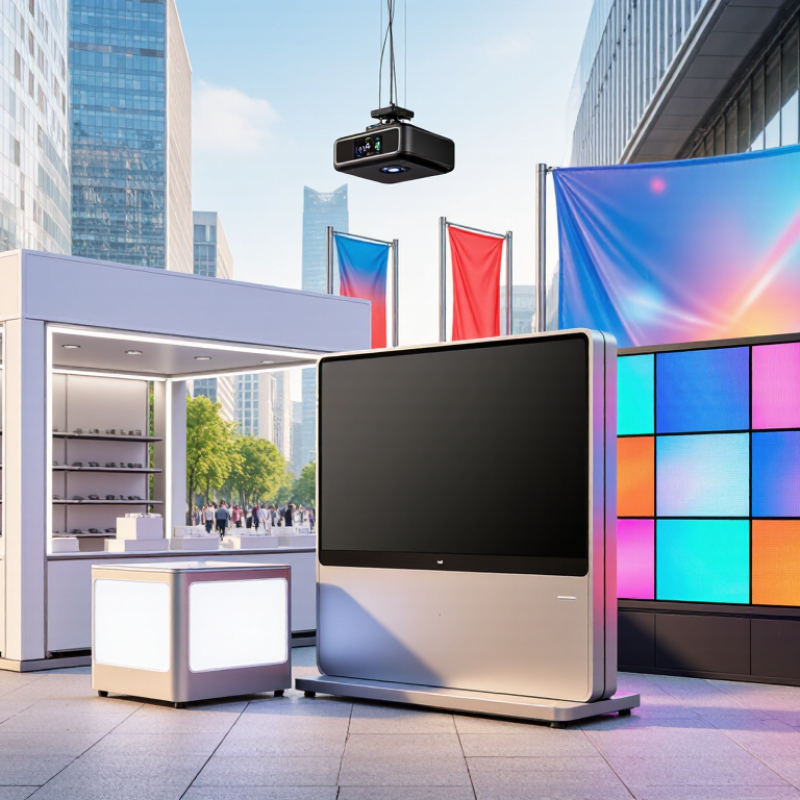
Advertising Equipment gives brands a physical and digital way to become visible, memorable, and measurable. The category includes banners, lightboxes, retail displays, trade-show booths, LED screens, digital signage, projection systems, and promotional fixtures. Some tools sit on a counter. Others cover an entire building. The category is broad, and that creates confusion.

Market data shows why equipment choices deserve careful evaluation. The IAB Internet Advertising Revenue Report, prepared with PwC, recorded $225.8 billion in U.S. internet advertising revenue in 2023. Meanwhile, the Out of Home Advertising Association of America reported record U.S. out-of-home advertising revenue of $9.1 billion in 2023. These figures suggest that physical visibility still matters beside online campaigns. However, revenue does not prove that every screen, banner, or display performs well.

Advertising expert David Ogilvy offered a useful standard: “The consumer isn’t a moron. She is your wife.” His point remains practical. Equipment should respect attention, context, and human judgment. A bright LED wall may attract eyes, yet poor brightness settings can cause discomfort. A printed banner may cost less, but weak materials can fade under sunlight and rain. This guide examines major Advertising Equipment types, their applications, maintenance needs, and measurable strengths. It also questions common assumptions. Bigger is not always better. Newer is not always more effective. Careful placement, readable design, reliable installation, and responsible operation often matter more than impressive specifications.
What Is Advertising Equipment and What Types Are Available?

Advertising Equipment: Definition, Functions, and Campaign Delivery Roles

Advertising equipment includes the physical and technical tools used to present, control, and measure promotional messages. Common examples include LED displays, digital kiosks, lightboxes, printed signage, point-of-sale units, speakers, media players, and audience sensors. Each device has a practical function. A screen attracts attention, a player schedules content, and a sensor can estimate exposure.

Campaign delivery depends on more than installing a display. Technicians select viewing height, brightness, weather protection, power access, and maintenance schedules. Content teams adapt images for distance and screen size. Media operators manage playback, timing, and location-based changes. Measurement systems then connect impressions with footfall, interaction, or sales signals. The IAB Internet Advertising Revenue Report reported US digital advertising revenue of 225.8 billion dollars in 2023, showing the scale of systems supporting modern campaign delivery. Still, equipment alone cannot create relevance.

Outdoor advertising also depends on reliable infrastructure. The World Out of Home Organization reported global out-of-home advertising revenue reached approximately 45.8 billion dollars in 2023. Digital formats represented a growing share, but performance varies by placement and audience movement. A bright display may waste energy if viewers pass too quickly. Measurement remains imperfect. Sensors can misread attention, while maintenance failures can interrupt delivery. Professional teams should document calibration, accessibility, data handling, and repair response times. The overlooked cable matters. So does the human review before launch.

Core Types: Print, Display, Audio, Video, and Digital Signage Equipment

What Is Advertising Equipment and What Types Are Available?

Advertising equipment includes the physical tools used to present promotional messages in public or commercial spaces. The right choice depends on location, audience movement, viewing distance, and maintenance needs. A small counter may need a compact display, while a busy entrance requires stronger visibility. Clear planning matters more than impressive specifications.

Print equipment supports posters, banners, brochures, and portable signs. It works well where people can pause and read. Display equipment includes stands, light boxes, frames, and modular structures. These tools create visible focal points at entrances, exhibitions, and retail areas. Print materials are affordable to update, but poor paper quality can make a professional message look careless.

Audio equipment uses speakers, microphones, and playback units to deliver announcements or promotional messages. Sound should remain clear without becoming distracting. Video equipment uses screens, projectors, and media players for motion-based content. Short videos often perform better than crowded presentations. Digital signage adds scheduled content, bright displays, and remote updates to public information areas. It can show prices, directions, service details, or timed campaigns. Brightness must match the room.

Too much glare reduces readability. Content also needs regular review. An outdated screen can weaken trust quickly. In practice, reliable equipment needs stable power, secure mounting, simple controls, and a realistic maintenance plan. A beautiful installation is not always an effective one. Test it from several angles before approval. Mistakes become obvious there.

What Is Advertising Equipment and What Types Are Available? — Core Types: Print, Display, Audio, Video, and Digital Signage Equipment
Equipment Type Common Equipment Typical Advertising Use Key Features Practical Considerations
Print Large-format printers, posters, banners, backlit film, and printed point-of-sale materials Posters, storefront graphics, event signage, window displays, and in-store promotions Produces physical graphics in a range of sizes and materials; some printers support indoor and outdoor applications. Choose materials and inks suited to the location. Consider print resolution, weather exposure, installation, and replacement frequency.
Display Exhibition stands, banner stands, light boxes, display frames, and countertop display units Trade shows, retail spaces, reception areas, product launches, and temporary promotions Provides a physical structure for presenting printed graphics or products; many portable systems can be assembled and reused. Check dimensions, stability, lighting requirements, transport needs, and compatibility with replacement graphics.
Audio Public-address speakers, amplifiers, microphones, audio players, and sound systems In-store announcements, event promotions, public spaces, and advertising messages in venues Communicates messages through sound and can cover areas where visual displays may be overlooked. Plan speaker placement and volume for clear coverage. Account for background noise, venue rules, and accessibility needs.
Video Projectors, projection screens, commercial displays, media players, and video walls Digital video advertisements, presentations, event content, and promotional displays Combines moving images and sound; suitable equipment depends on viewing distance, ambient light, and screen size. Consider brightness, resolution, playback connections, mounting, ventilation, and whether content needs scheduled playback.
Digital signage Commercial signage displays, media players, content-management software, and mounting hardware Retail promotions, menus, wayfinding, public information, and scheduled advertising content Displays electronically managed content that can be updated without replacing printed graphics; screens may operate individually or as part of a network. Check operating hours, screen orientation, network access, content scheduling, security, and the suitability of the display for its environment.

Digital Screens and LED Walls: 4K Resolution and the $211.2B Online Ad Market

Advertising equipment includes digital screens, LED walls, media players, mounting systems, and network controls. These tools turn empty walls into measurable communication spaces. A 4K display shows sharper product textures, small text, and crowded retail scenes. However, resolution alone cannot fix poor lighting or weak creative design.

$211.2 billion
U.S. internet advertising revenue in 2023

The IAB and PwC Internet Advertising Revenue Report recorded $211.2 billion in U.S. internet advertising revenue in 2023. That figure shows why physical displays increasingly connect with online campaigns. A retail LED wall can present a short video, while a QR code links viewers to a mobile landing page. Real-time content updates also reduce printing waste. Still, the connection is not automatic. A bright screen may attract attention but create glare, discomfort, or unnecessary energy use. The Digital Signage Federation stresses planning around viewing distance, brightness, accessibility, and content scheduling.

Tips: Match pixel pitch to viewing distance. Use 4K when viewers stand close. Choose higher brightness for sunlit windows, but test glare at noon. Keep key messages short. Measure impressions carefully, because foot traffic is not equal to attention. I have found that a smaller screen sometimes performs better when placement feels natural. That detail is easy to miss. Check power consumption, ventilation, warranty terms, and network security before installation. Review performance weekly, then adjust timing, contrast, and message length.

Out-of-Home Equipment: Billboards, Transit Displays, and $9.1B 2023 Revenue

Advertising equipment includes the physical systems that place commercial messages in public spaces. Out-of-home equipment is especially visible: roadside billboards, transit displays, street furniture panels, and digital screens. In 2023, this sector generated about $9.1 billion in revenue, reflecting strong demand for public-facing advertising inventory.

A billboard installation depends on more than a printed panel. Steel supports, weather-resistant surfaces, lighting, electrical controls, and maintenance access all affect performance. Digital units also need brightness sensors, secure content connections, and reliable cooling. Transit displays use different hardware. They must fit inside shelters, stations, buses, or rail vehicles without blocking movement. Clear viewing angles matter.

Small details often determine whether equipment works well. A scratched panel can weaken a campaign’s appearance. Poor lighting can make a message unreadable after sunset. Field inspections should check structural wear, cable protection, screen brightness, and local permitting requirements. Measurement data should also separate impressions from actual attention. That distinction is easy to miss.

Revenue figures can be useful, but they do not explain every installation’s value. A busy station may deliver repeated exposure, while a roadside display may offer longer viewing distance. Weather, traffic changes, and construction can reduce results unexpectedly. Some equipment is impressive but inefficient. That deserves honest review.

Equipment Selection: Reach, Brightness, Energy Use, Durability, and Compliance

Advertising equipment includes the physical tools used to display messages in public or commercial spaces. Common examples include digital screens, light boxes, display stands, projection systems, and illuminated signs. Choosing among them requires more than comparing appearance or price. The location, viewing distance, audience movement, and installation conditions should guide the decision.

Reach comes first in practical planning. A roadside display needs strong visibility from a distance, while an indoor counter display may need softer brightness. Excessive brightness can cause glare and reduce readability. Insufficient brightness disappears under sunlight. In field checks, viewing the display from several angles often reveals problems that specifications miss. Screen brightness should also adapt to changing daylight.

Energy use affects operating costs and environmental performance. Efficient lighting, automatic dimming, and scheduled operation can reduce unnecessary consumption. However, lower power use should not weaken visibility or reliability. Durability matters in real conditions. Outdoor equipment may face rain, dust, heat, vibration, and repeated cleaning. Its enclosure, mounting system, and service access deserve careful inspection.

Compliance is equally important. Equipment should meet applicable electrical, structural, accessibility, fire safety, and advertising requirements. Local approval may also affect placement, brightness, and operating hours. My early selections focused too heavily on visual impact. That was a mistake. A durable unit with moderate brightness can perform better than an impressive but fragile installation. Maintenance records, warranty terms, and replacement access provide stronger evidence than attractive product claims. Some projects still overlook them.

What Is Advertising Equipment and What Types Are Available?

Equipment selection depends on audience reach, brightness, energy use, durability, and regulatory compliance. The chart uses a relative planning index from 1 to 5, where 5 indicates the strongest practical performance for the selected criterion.

Printed banners generally offer low operating energy use, while outdoor LED displays provide strong visibility and reach but require more electricity and stricter brightness controls. Indoor digital signage typically provides a balanced option for controlled environments. Actual results vary with viewing distance, installation location, operating hours, local regulations, and maintenance conditions.

FAQS

What is advertising equipment?

Advertising equipment includes physical tools for presenting messages in public or commercial spaces. Examples include posters, screens, speakers, stands, projectors, and light boxes. Location matters more than impressive specifications.

Which equipment works best for printed advertising?

Print equipment suits posters, banners, brochures, and portable signs. It works well where people can pause and read. Weak paper quality can make a careful message look careless.

When should a business use digital signage?

Digital signage suits locations needing scheduled content or frequent updates. It can display prices, directions, service details, and timed campaigns. The screen should match the room’s brightness.

How should brightness be selected?

Outdoor screens need strong brightness under sunlight. Indoor displays usually need softer settings. Too much glare reduces readability. Test the screen from several angles.

What should outdoor advertising equipment withstand?

Outdoor equipment may face rain, dust, heat, vibration, and repeated cleaning. Inspect the enclosure, steel supports, cable protection, and mounting system. Small damage can become expensive.

What equipment is used for audio and video messages?

Audio systems use speakers, microphones, and playback units. Video systems use screens, projectors, and media players. Short videos often work better than crowded presentations.

How can energy use be reduced?

Automatic dimming and scheduled operation can reduce unnecessary power use. Efficient lighting also helps control operating costs. Lower consumption should not weaken visibility or reliability.

What compliance issues should be checked?

Check electrical, structural, accessibility, fire safety, and advertising requirements. Local approval may affect brightness, placement, and operating hours. Ignoring these details can delay installation.

How should advertising equipment be maintained?

Use stable power, secure mounting, simple controls, and clear service access. Review digital content regularly. An outdated screen can weaken trust quickly. Maintenance records matter.

Is the most impressive installation always the best choice?

No. A durable unit with moderate brightness may perform better than a fragile, striking installation. I once valued visual impact too highly. That was a mistake.

Conclusion

Advertising Equipment includes the tools and systems used to create, display, and deliver promotional messages across physical and digital environments. Its main functions are to attract attention, communicate information clearly, support campaign delivery, and help advertisers reach specific audiences. Common categories include print materials, display structures, audio systems, video equipment, and digital signage. Modern campaigns often use digital screens and LED walls capable of 4K resolution, while online advertising represents a market valued at approximately $211.2 billion.

Out-of-home Advertising Equipment includes billboards, transit displays, street-level panels, and other public-facing installations, contributing to a sector that generated about $9.1 billion in revenue in 2023. Selecting the right equipment requires evaluating audience reach, screen brightness, energy consumption, durability, maintenance needs, installation conditions, and regulatory compliance. A well-planned solution balances visual impact, operational reliability, cost efficiency, and responsible use to support effective campaigns in different locations and environments.

Henry

Henry

Henry is a dedicated marketing professional with a profound expertise in the company's offerings. With years of experience in the industry, he possesses an impressive understanding of the market dynamics and consumer behaviors that drive success. Henry is committed to sharing his insights through......